Built for one person, first.
An ongoing recovery prompt that runs on any screen at hand, including the TVs in rooms where a laptop or tablet isn't available or appropriate.
Why SDR exists
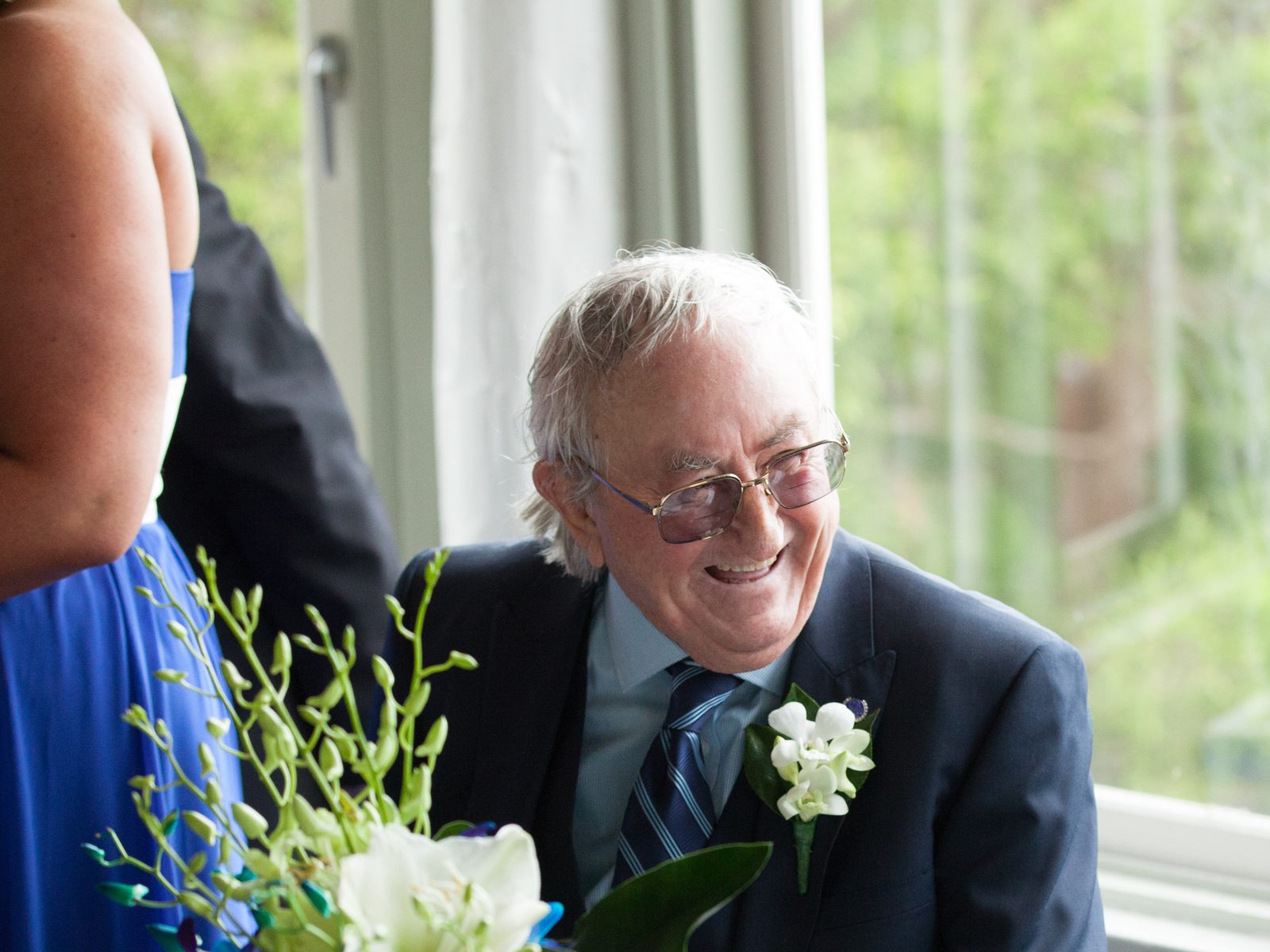
SDR started with one person: my father.
Until mid-February 2026, he was fiercely independent. At 91, he was still walking from Balgowlah into Manly any chance he got. He was still driving his van around New South Wales, setting up his tent and camping wherever the trip took him. Then he had a stroke.
The first weeks were delirium. He had no routine he could follow, and wouldn't have remembered one if he had. The occupational therapists on the ward were doing their rounds, working through the other stroke patients, trying to help him recover and assess his trajectory. They weren't there to leave him a program. So between rounds he was just there, in a bed, unsure what to do next, with no ongoing prompts about how he might begin to come back.
We tried the obvious things first.
We printed exercises in large type and laminated them. One went on a lanyard from his bed rail; another sat on his service table. Invariably they got moved at some point during a sheet change. Out of reach, out of view, and ultimately out of mind.
We hung a large-faced clock on the wall and pinned a different coloured shape at each fifteen minute mark: a blue star at 12, an orange circle at 3, a pink triangle at 6, a green square at 9. Each shape pointed to an exercise. He didn't need re-explaining. He could match the shape on the clock to the shape on the card.
We tried one card per exercise, full size, but his dexterity wasn't good enough to swap between them. So we put all four on a single card. That sort of worked, but the page got cluttered and harder to read.
What kept working was the cue at the right time. What didn't was the paper. So I put together a quick prototype that ran on a small screen, then turned it into a small HDMI dongle you can plug into any television.
As I was building it, I kept thinking about how many people are in aged care and respite who might not have needed to be, if they had been able to engage meaningfully with their recovery through the day, every day, on their own time, with a little prompting and exercises chosen for them. That's worth building toward. So I kept developing the idea.
Who it's for
SDR is for people who would benefit from consistent, visual cues to follow a recovery or wellness routine, and for the family members, carers, and clinicians supporting them.
- People recovering from stroke, a fall, or surgery, where a calm, repeating visual prompt makes it easier to stay with the exercises through the day
- Anyone who finds it easier to follow a visual cue on a screen than to refer back to a written sheet or respond to a phone alert
- Carers who want to keep a program running and make adjustments from wherever they are, without needing to be in the room
- Clinicians who want a simple way to keep a program active and consistent in the time between appointments
About SDR
The exercises and cadence in most recovery programs are right. The gap is between visits, when there's no one in the room to prompt the next thing. SDR is built for that gap.
The display runs the program on its own, on whatever screen is nearest. Each exercise appears at the cadence you set, all day, with no app to open and no phone to navigate. No daily routine to remember.
A family member, carer, or clinician builds the program once: which exercises, in what order, how often. The display runs it from there.
SDR works at home, in hospital, in aged care, and in respite: wherever a suitable screen lives. The web app is free in any browser. The HDMI Dongle is a finished, off-grid device that shows the activity cards on any TV, configured directly on its own Wi-Fi without an internet connection.
Try it
- Open the web app: free, in any browser.
- Bedside Screen: an iPad mini, set up and ready to go.
- HDMI Dongle: turns any TV into an SDR display.
Every kit sold helps keep the service running and, where possible, subsidises access for people who can't easily afford one. If SDR has helped someone in your household, or if you have feedback, get in touch.
I hope whoever uses it reclaims more of their life back, sooner than they otherwise would without the prompts.
Bayani Mills